


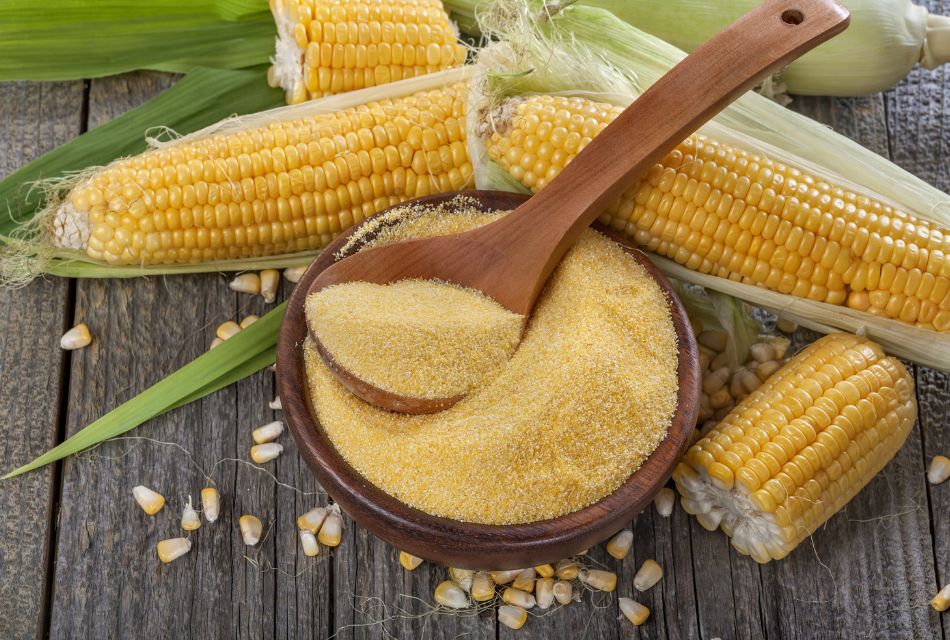
Corn Grits for the Brewing Industry
The use of corn grits in the brewing industry originated as an intentional solution to address a specific problem, emerging more from chance than from planning.
This has a historical explanation. Beer production has adapted to the local conditions of its regions of origin, giving the final product diverse organoleptic and nutritional qualities—an evolutionary journey for lovers of this richly nuanced beverage.
In the case of corn grits, also known as brewer’s grits, their use in the brewing industry appears to have been a practical adaptation by German settlers who emigrated to the United States in the 19th century. These settlers sought ways to continue enjoying beer despite having to forgo malt as their primary ingredient.
The reason was that native malt in the United States did not deliver the same results as European malt. Consequently, they opted to replace or combine it with corn grits, producing a wort similar to that made with European ingredients. In their search for a suitable substitute to continue brewing their signature beverage, these settlers turned to local cornfields, finding in corn grits a solution for crafting lighter, clearer beers.
This innovative approach would have been impossible in Germany, where the controversial German Beer Purity Law (Reinheitsgebot) has prohibited, since the 16th century, the use of any ingredients other than water, barley malt, and hops in beer production.
Brewer’s grits are produced through a semi-wet milling process—steamed to about 20% moisture—of the endosperm and germ of corn kernels after a cleaning and dehulling process. The result is a finely milled corn product, high in starch and low in fat, thanks to the use of ground corn rather than whole kernels.
This type of corn grit is ideal for the brewing industry’s fermentation processes due to its starch content and low-fat composition.
At Dacsa Group, we offer high-quality corn grits to the brewing industry, made from non-genetically modified raw materials and strictly aligned with European regulations to ensure a product that meets all safety and quality standards.
What began as a near-accidental collaboration between corn and the brewing industry has become a cornerstone ingredient. Over time, corn grits have proven instrumental in increasing the carbohydrate content of brewing wort compared to proteins, yielding beers with lighter organoleptic properties.
Examples of beers commonly made using corn grits include various ales—British, Belgian, and, unsurprisingly, North American beers. Corn grits give beer a lighter and more golden hue than other varieties, along with a subtle sweetness and smoothness that provide the extra lightness and softness sought by many consumers.
Dacsa Group: Supporting the Brewing Industry with Corn Grits
Dacsa Group is proud to offer premium-quality brewer’s grits to the beer industry. Made from carefully selected raw materials, our grits meet the highest standards to deliver exceptional results in brewing.