


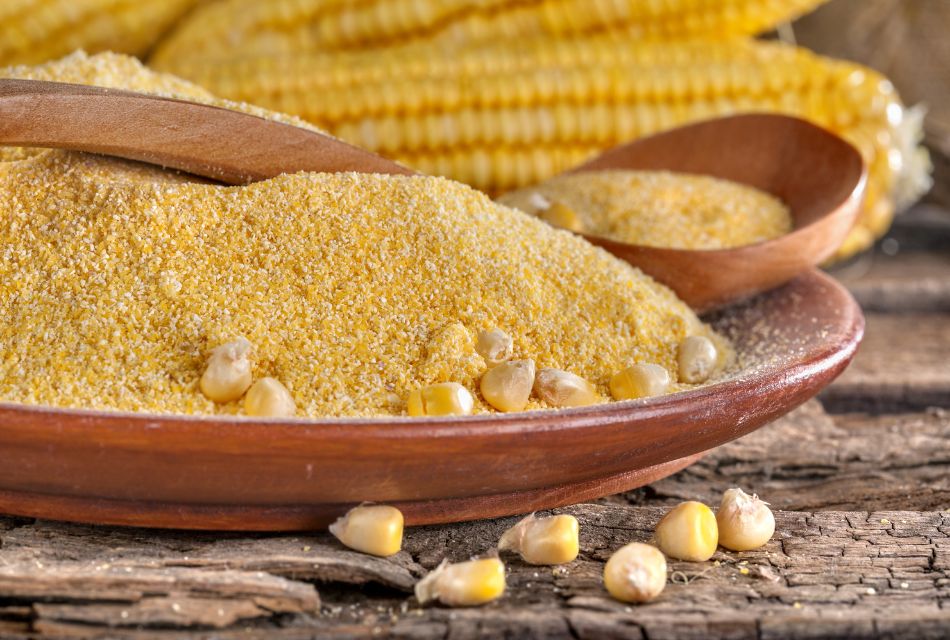
Production of maize grits for the food sector
In the food sector, maize grits provide multiple applications for a wide variety of foods and beverages.
These applications have been growing as new avenues of development have been found to obtain food solutions that enrich and improve the final product.
Maize was the most widely grown cereal in the 2022/2023 world crop year, in which, according to some sources such as Statitsa, it even overtook rice and wheat, both traditionally considered as natural and undisputed leaders. Specifically, the production of this type of crop stood at around 1,160 million metric tonnes.
The same source points out that, in Spain, maize is the third most cultivated cereal after barley and wheat.
Its high rate of cultivation is an indicator of the increase in consumption of this basic cereal in the diet of Central and South America, which is in great demand for various uses by the food industry all over the world.
For leading companies in the sector, such as Dacsa Group, the process of obtaining maize grits begins with the selection of top quality raw material at source and then moves on to the clean grain milling stage in which different by-products can be obtained depending, for example, on the thickness of the granules in the final product.
In particular, maize semolina has the appearance of a coarse flour of different sizes, but always larger than those of flour powder; a coarse flour that retains its shape without falling apart even after cooking.
To obtain semolina, the maize grains are subjected to physical processes aimed at separating the different parts of the cereal grain.
In the case of dry milling, the process consists of separating the different anatomical components of the grain, i.e. the germ, the endosperm and the bran. The end result of this process is the production of specific semolina for human consumption with different particle sizes.
Semolina offers the food industry excellent nutritional values for a healthy diet. It is rich in selenium, iron, potassium and magnesium, making the semolina itself, or the products in which it is present, a food of great nutritional value.