


Uses of chickpea flour in food solutions
The pulses flour market has seen a strong increase in demand in recent years and is forecast to register a compound annual growth rate of around 8% over the next 5 years, according to the pulses flour market study 2023-2028, developed by the agency Mordor Intelligence.
New lifestyles, gastronomic influences from other cultures, medical constraints or the search for healthy alternatives have turned pulse flour into a highly demanded food in general and chickpea flour in particular into one of the most sought-after pulse flours.
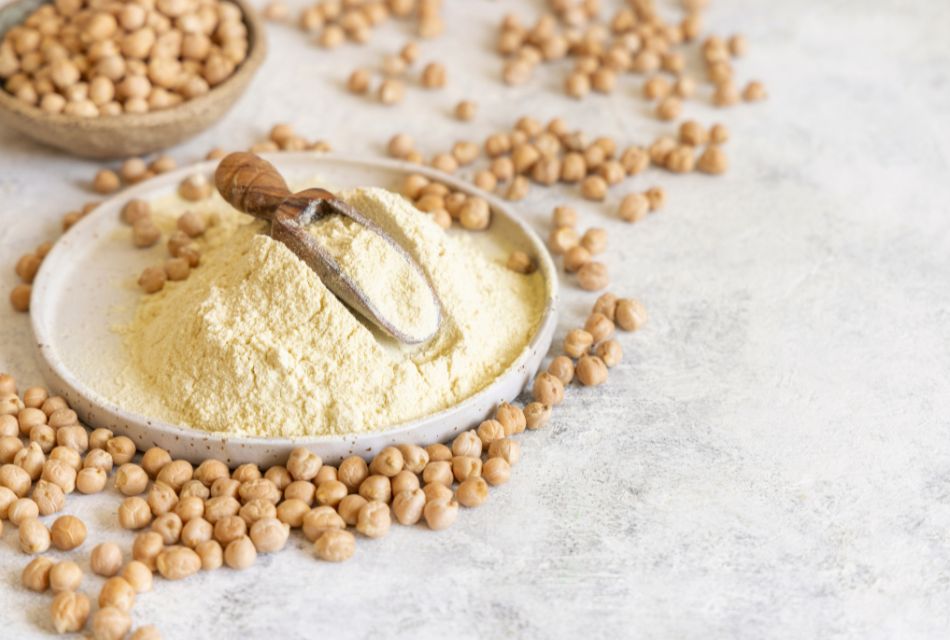
The chickpea flour offered by companies such as Molendum Ingredients – the Dacsa Group subsidiary that offers two varieties: whole chickpea flour and peeled chickpea flour – is obtained from a top quality raw material at source: the dry, ripe, industrially clean and, of course, gluten-free grain, after a milling process that produces a particularly aromatic, fine and smooth flour designed to meet the most demanding expectations. This makes chickpea flour one of the most sought-after pulse flours in particular.
There are several reasons why the food industry and consumers have increased the demand for this type of flour. In general, we could highlight the absence of gluten in its composition at source, which makes it especially suitable for diets for people with gluten intolerance or coeliacs; a higher fibre content; a higher protein value compared to other types of flour; a composition rich in multiple vitamins such as vitamin A, vitamins of the B group or vitamins C and E and its considerable content in fatty acids, among which Omega 6 stands out.
In fact, the food industry is aware of this value that chickpea flour offers to different food solutions, and has therefore incorporated it into many compositions for various applications such as food for babies and the elderly with special dietary and nutritional needs; baking and confectionery; animal feed; vegetable drinks; breakfast cereals; sauces and creams; dietetics and sports nutrition; vegetable desserts; toppings and breading or vegetable snacks and spreads, among others.
Chickpea flour also works as a thickener for different food solutions, thanks to its starch content, which also naturally enhances the flavour without letting its characteristic taste modify the final result, but rather improving it.
Solutions for the food industry whose demand continues to grow thanks to the versatility of chickpea flour, which also undoubtedly stands out for its special organoleptic qualities that allow it to transform various recipes, such as pancakes, which can also be prepared without eggs if chickpea flour is used instead of wheat flour, or traditional batters or others such as falafel or tempura, giving the latter dishes a different, particularly crunchy and delicious touch.